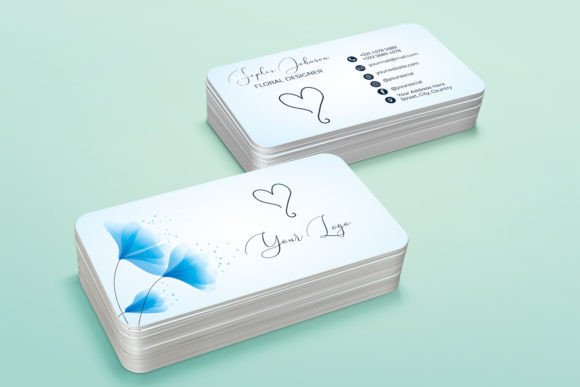
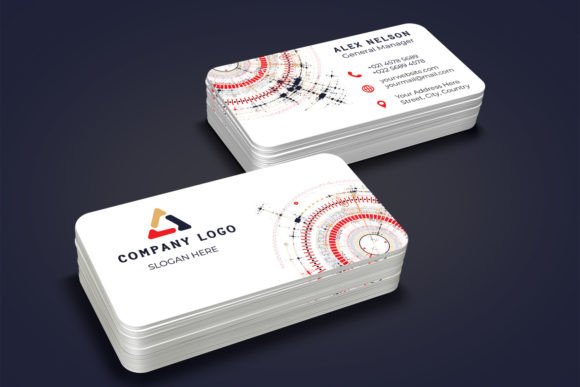
Holographic Business Card Design Template: A Professional Evaluation
In the current landscape of professional networking, the standard paper business card often struggles to capture attention. It is a physical medium that is frequently handled once and discarded. This is where the Holographic Business Card Design Template offers a distinct advantage. By leveraging the visual impact of holographic effects within a digital design framework, this resource allows professionals to create a tactile experience before the card is even printed. The template serves as a comprehensive toolkit for individuals who need to elevate their personal branding without requiring advanced graphic design skills.
This resource is not merely a static image; it is a fully editable suite of files designed for Adobe Photoshop and Adobe Illustrator. Its primary value lies in its flexibility. Whether you are a freelancer, a small business owner, or a corporate marketer, the ability to modify backgrounds, colors, text, fonts, and imagery ensures that the final output aligns perfectly with your specific brand identity. The goal of this evaluation is to determine how well this template performs in real-world scenarios, focusing on usability, print quality, and long-term versatility.
Core Characteristics and Technical Specifications
The foundation of any successful design project is the technical integrity of the source files. The Holographic Business Card Design Template is built with print-ready standards in mind. It operates in CMYK color mode, which is essential for professional printing processes. Unlike RGB designs that look vibrant on screens but appear dull when printed, this template adheres to the color gamut required by commercial printers. Furthermore, the resolution is set at 300 DPI, ensuring that every element remains crisp and sharp, even at the smallest scales typical of visiting cards.
Physical dimensions are another critical factor. The template provides a standard size of 3.5 x 2 inches (90 x 51 mm), which is the industry norm for business cards in North America and many other regions. Crucially, it includes a bleed of 0.125 inches. This margin prevents white edges from appearing if the trimming process varies slightly during production. Without this feature, a design might look unprofessional due to uneven cuts. The inclusion of both front and back designs within the same package ensures a cohesive presentation, allowing users to utilize the reverse side for additional contact information, social media links, or a secondary call to action.
The file structure is equally robust. The ZIP archive contains multiple formats to accommodate different workflows:
- AI and EPS files: These native Adobe Illustrator files allow for vector-based editing. Vector graphics are infinitely scalable, meaning you can resize text or logos without losing quality. This is vital for brands that may need to adapt their cards for different paper sizes or promotional materials later.
- PSD files: For those who prefer Photoshop, the layered PSD files offer extensive control over effects, blending modes, and image compositing. The layers are described as separate and well-organized, which significantly reduces the time spent hunting for specific elements like the background layer versus the text layer.
- PNG and JPG files: These raster formats provide immediate preview capabilities and are suitable for quick digital sharing or situations where vector editing is not necessary.
Usability and Customization Potential
One of the most significant barriers to creating high-quality marketing materials is the steep learning curve associated with professional software. This template aims to bridge that gap. Because it is fully editable in both Photoshop and Illustrator, it caters to a wide range of skill levels. Users do not need to be expert designers to achieve a polished result. The organized layer structure means that changing the company name, phone number, or email address is straightforward, provided the user understands basic navigation within these applications.
The template also addresses the challenge of typography. It includes access to 100 free fonts, which is a substantial asset. Typography plays a massive role in conveying brand personality. A tech startup might require a clean, sans-serif font, while a creative agency might opt for something more decorative. Having a curated selection of 100 fonts integrated into the workflow saves hours of searching for compatible typefaces online. However, users should verify the licensing terms of these fonts to ensure they are permitted for commercial use in their specific projects.
The customization extends beyond text. The ability to swap out images allows users to incorporate product photography, headshots, or abstract patterns that match their industry. For instance, a photographer might replace a generic geometric background with a subtle texture that complements their portfolio style. This level of control transforms the template from a generic starting point into a unique brand asset. The instruction to change backgrounds and colors suggests that the template is adaptable to various color palettes, ensuring it does not feel "stuck" in one specific aesthetic.
Real-World Performance and Application
When considering where this template fits best, the answer lies in industries where visual distinction is paramount. Marketing agencies, consultants, real estate agents, and creative freelancers benefit most from the holographic aesthetic. In a stack of standard matte or glossy cards, a holographic finish stands out immediately. It signals innovation and attention to detail. The template facilitates this by providing the structural design needed to simulate or prepare for a foil stamping or holographic foil printing process.
However, it is important to note that the digital template itself does not magically create a holographic effect on paper. Instead, it provides the layout and design elements that are optimized for such printing techniques. When sent to a professional printer, the design will guide the placement of the holographic foil. If a user attempts to print this directly from a home office printer using standard ink, the "holographic" aspect will not be visible unless they use specialized holographic paper or foil transfer sheets. Therefore, the effectiveness of the design depends heavily on the printing method chosen.
The reliability of the template is supported by its structured nature. The separation of layers and the provision of both AI and PSD versions mean that if a user encounters an issue with one file format, they have a backup. This redundancy is a hallmark of professional-grade assets. For example, if a user opens the file in an older version of Illustrator, they might encounter compatibility issues, but having the PSD version available ensures they can still edit the design in Photoshop. This multi-format approach demonstrates a thoughtful consideration of user variability.
Target Audience and Strategic Fit
This resource is particularly suited for entrepreneurs and small business owners who operate on tight budgets but cannot compromise on appearance. Hiring a custom designer can cost hundreds or thousands of dollars. Using a pre-made, high-quality template reduces this cost significantly while maintaining a professional standard. It is also ideal for marketers managing multiple client accounts who need to produce consistent branding materials quickly.
For educators and bloggers, the template offers a way to present themselves as serious authorities in their field. A well-designed card can facilitate better networking at conferences and workshops. The "calling card" aspect mentioned in the description highlights its utility for face-to-face interactions. In these scenarios, the first impression is fleeting; a holographic design creates a memorable moment that encourages the recipient to keep the card rather than discard it.
There are limitations to consider. While the template is flexible, it requires a baseline understanding of design principles. Simply pasting text into the fields without adjusting spacing or hierarchy can result in a cluttered look. Users must exercise judgment regarding font choices and image placement to maintain the "clean structured" promise of the files. Additionally, the reliance on specific software means that users without access to Adobe Creative Cloud will need to find alternative ways to open or convert the files, though the inclusion of PNG and JPG helps mitigate this.
Conclusion on Practical Value
The Holographic Business Card Design Template represents a practical solution for modern branding needs. It balances the desire for a unique, eye-catching aesthetic with the necessity of technical precision. By offering a complete suite of editable files, including vectors for scalability and raster options for ease of use, it accommodates diverse workflows. The inclusion of 100 free fonts and the strict adherence to print-ready specifications like 300 DPI and proper bleeds demonstrate a commitment to quality.
While no template can replace the nuance of a custom design commission, this asset provides an excellent middle ground. It empowers users to create a cohesive brand style that looks professional and polished. For anyone looking to make a strong first impression in a competitive market, this template offers the tools necessary to stand out. It is a reliable resource that, when used correctly, can significantly enhance the perceived value of a professional's personal brand.